
Imagine opening a shop in the middle of a desert. No roads, no signs, no visitors. That’s exactly what a website without SEO looks like. You may have the best product, service, or content in the world—but if people can’t find you, it doesn’t matter.
After working in SEO for over 9 years, I’ve seen algorithms change, trends come and go, and shortcuts fail. But one thing never changed: SEO is the backbone of online visibility. If Google is the highway of the internet, SEO is your GPS.
Every year, someone declares SEO “dead.”
Every year, businesses that rank on Google quietly outperform their competitors.
SEO isn’t dead.
Bad SEO is dead.
Modern SEO isn’t about tricks, loopholes, or keyword stuffing. It’s about building a website that deserves to rank—technically, contextually, and experientially.
After working in SEO for over nine years, one thing is crystal clear:
SEO remains the highest ROI digital channel when done right.
What Is SEO? (Search Engine Optimization Explained Simply)
SEO (Search Engine Optimization) is the process of improving a website so it appears higher in organic (non-paid) search engine results.
In simple words:
SEO helps your website show up when people search for something related to your business.
If someone searches:
- “best digital marketing consultant”
- “local SEO expert”
- “SEO services near me”
SEO decides who shows up first—and who gets ignored.
How Search Engines Actually Work
Search engines aren’t magical. They follow systems.
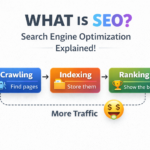
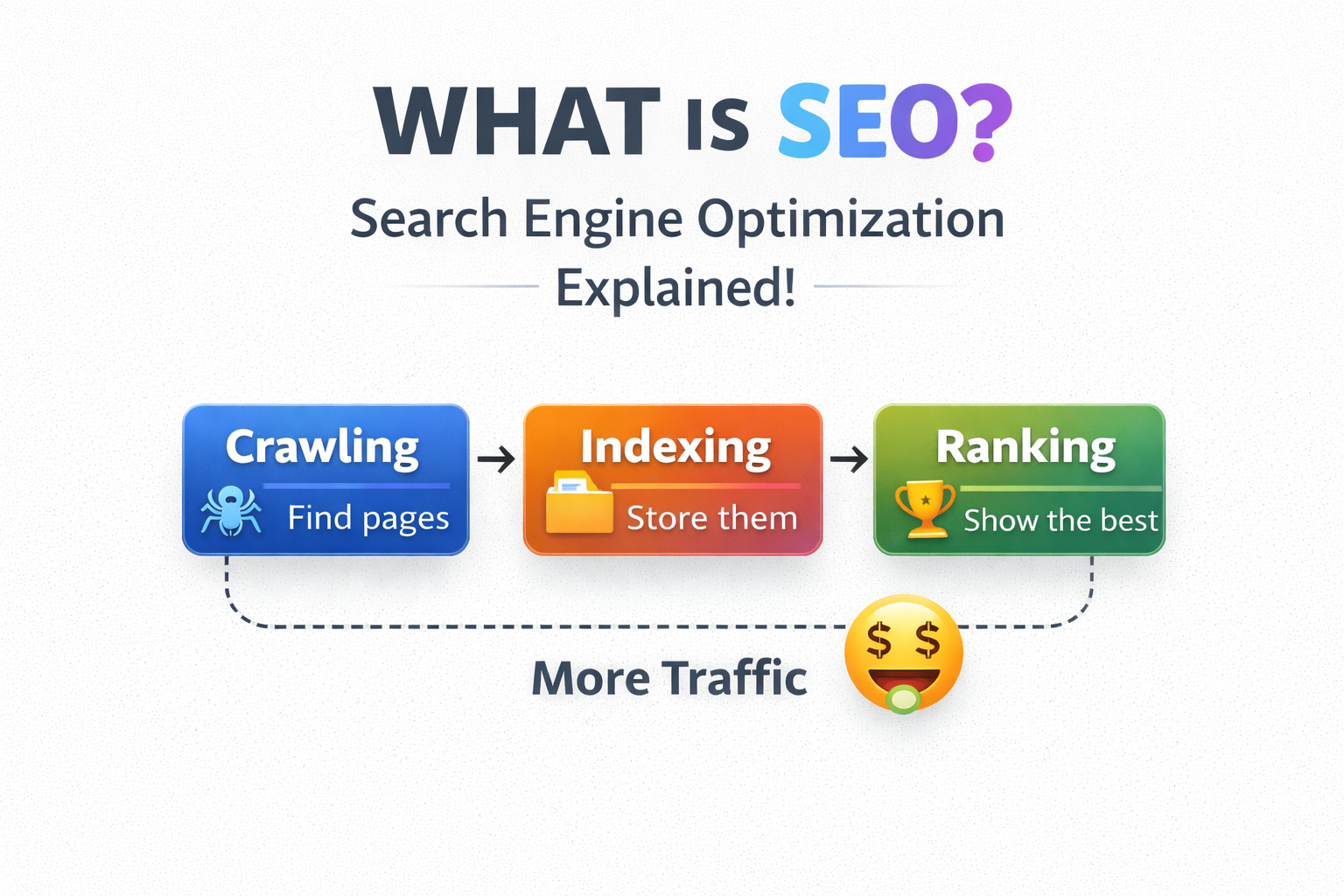
Crawling: How Google Finds Pages
Google uses bots (called crawlers or spiders) to scan the internet. They move from link to link, discovering pages like ants exploring food trails.
If your page isn’t crawlable, it might as well not exist.
Indexing: Storing the Web
Once crawled, pages are stored in Google’s massive database—called the index.
No index = no rankings.
Ranking: Deciding Who Deserves Page One
When someone searches, Google doesn’t search the internet live. It searches its index and ranks pages based on:
- Relevance
- Quality
- Authority
- User experience
SEO helps you win this ranking battle.
Why SEO Matters More Than Ever
SEO vs Paid Ads
Ads stop the moment you stop paying.
SEO keeps working while you sleep.
SEO = compound interest
Ads = rented attention
SEO and User Trust
People trust organic results more than ads. Ranking high tells users:
“This site knows what it’s talking about.”
SEO for Long-Term Growth
SEO builds:
- Brand authority
- Sustainable traffic
- Lower acquisition cost
It’s not an expense. It’s an asset.
Types of SEO You Must Understand
SEO isn’t one thing—it’s a system.
On-Page SEO
This is everything on your website.
Content Optimization
Content must:
- Match search intent
- Answer questions clearly
- Be better than competitors
HTML Elements
Includes:
- Title tags
- Meta descriptions
- Headings (H1–H6)
- Image alt text
These help search engines understand your page.
Technical SEO
This is the foundation.
Site Speed
Slow sites lose rankings and users. Simple.
Mobile Optimization
Google uses mobile-first indexing. If your site fails on mobile, SEO fails too.
Off-Page SEO
This happens outside your website.
Backlinks
Links are votes of trust. Quality beats quantity—always.
Brand Signals
Mentions, reviews, and authority matter more than ever.
Local SEO
Perfect for:
- Local businesses
- Service providers
- Consultants
Google Maps + reviews + local relevance = leads.
Ecommerce SEO
Product pages, category optimization, filters, and schema all matter. Ecommerce SEO is technical but powerful.
Keyword Research: The Foundation of SEO
SEO starts with understanding how people search.
Search Intent Explained
Every keyword has intent:
- Informational
- Navigational
- Commercial
- Transactional
Ranking without matching intent is pointless.
Short-Tail vs Long-Tail Keywords
Short-tail:
- High volume
- High competition
Long-tail:
- Lower volume
- Higher conversion
Smart SEO uses both.
Keyword Mapping
Each page must target:
- One primary keyword
- Supporting secondary keywords
No cannibalization. No confusion.
Content and SEO: Why Content Wins
SEO without content is like a car without fuel.
Helpful Content
Google rewards content that:
- Solves problems
- Is easy to read
- Feels human
EEAT (Experience, Expertise, Authority, Trust)
After years in SEO, I can say this confidently:
Experience matters more than tricks.
Real insights beat AI-spun fluff.
Technical SEO Explained Without the Jargon
Core Web Vitals
Google measures:
- Loading speed
- Interactivity
- Visual stability
User experience is ranking power.
Indexing Issues
Common problems:
- Noindex tags
- Duplicate content
- Crawl budget waste
Fixing these alone can boost traffic.
Schema Markup
Schema helps search engines understand context and improves visibility with rich results.
Link Building the Right Way
Natural Links vs Manipulative Links
Paid spammy links = penalties
Earned links = growth
Always.
Outreach That Works
Real relationships. Real value. Real content.
That’s how links last.
SEO for Different Business Types
SEO for Small Businesses
Local focus, service pages, and reviews drive results fast.
SEO for Blogs
Consistency + topical authority = traffic growth.
SEO for Agencies
Authority, case studies, and thought leadership matter most.
Common SEO Myths That Waste Time
- “SEO is dead”
- “More keywords = better rankings”
- “Links don’t matter anymore”
I’ve heard them all. None are true.
How Long Does SEO Take to Work?
SEO is not instant.
Expect:
- 3–6 months for early traction
- 6–12 months for strong results
Good SEO compounds.
SEO Mistakes I See After 9 Years in the Field
- Chasing hacks instead of fundamentals
- Ignoring technical issues
- Writing content for robots, not humans
- Expecting instant results
SEO rewards patience and precision.
Future of SEO: What’s Changing and What’s Not
What’s changing:
- AI search
- SERP layouts
- User behavior
What’s not:
- Quality content
- Authority
- Trust
- User experience
SEO evolves—but fundamentals stay strong.
Conclusion
SEO is not about gaming Google. It’s about earning visibility.
After 9 years in SEO, one truth stands clear:
Websites that help users honestly will always win.
SEO is strategy, content, technical strength, and trust—working together. Master that, and search engines follow.
FAQs
Is SEO still worth it in 2026 and beyond?
Yes. SEO is more important now because competition is higher and trust matters more.
Can beginners learn SEO?
Absolutely. SEO rewards curiosity, testing, and consistency.
Is content enough for SEO success?
No. Content must be supported by technical SEO and authority.
How often should SEO be updated?
SEO is ongoing. Monthly optimization is ideal.
Is SEO better than social media marketing?
They work best together. SEO captures intent; social builds awareness.